;
幸野楳嶺(1844-1895)は 明治期京都で円山-四条派の写実的な画風を基礎とし 花鳥画に優れた作品を多く残しました
また日本画壇を代表する多くの画家を育成した教育者としても知られています
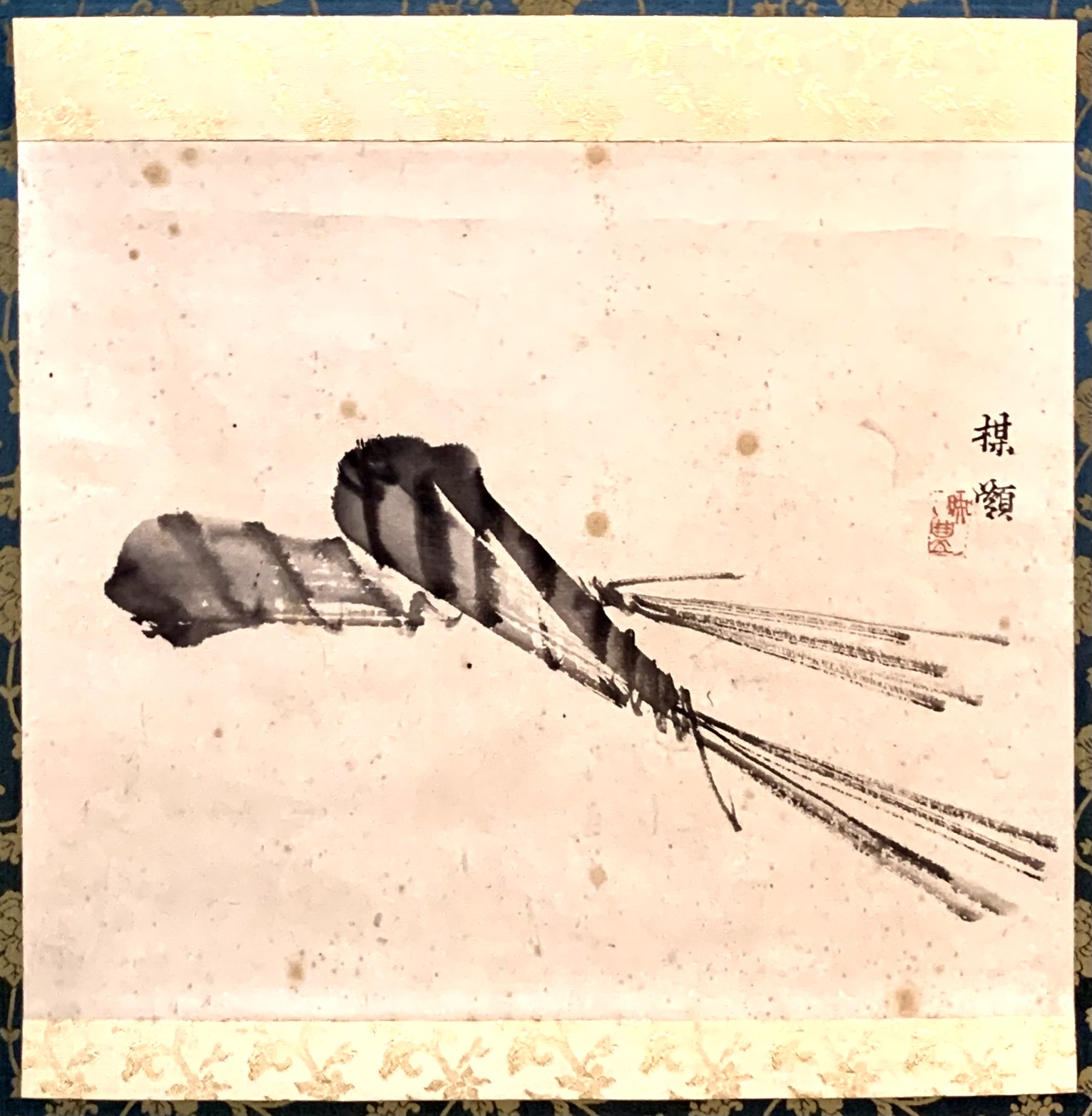
描かれた ちまき は古来より東アジアで広く食され 日本では端午の節句に縁起物として供されるなど
地域ごとに多様な特色を持つ食文化の象徴です
素朴で日常的な対象にも洗練された美意識を込める楳嶺の画境の一端が現われています
Kōno Bairei (1844–1895), based in Kyoto during the Meiji era,
was renowned for his mastery of realistic styles from the Maruyama-Shijō school,
creating numerous outstanding works particularly in Bird-and-Flower paintings.
He is also recognised as an educator who nurtured many leading figures in the Japanese art world.
The depicted Chimaki has been widely consumed throughout East Asia since ancient times,
and in Japan it holds cultural significance as a festive offering on Tango no Sekku (Boys' Day).
It represents the diverse culinary traditions unique to each region.
This work embodies an aspect of Bairei's refined aesthetic sensibility,
transforming an everyday, humble object into an elegant artistic statement.